ZYNYZ® safety profile1
Combination therapy safety profile (POD1UM-303)1
Safety was evaluated in 306 patients with inoperable locally recurrent or metastatic recurrent squamous cell carcinoma of the anal canal (SCAC).
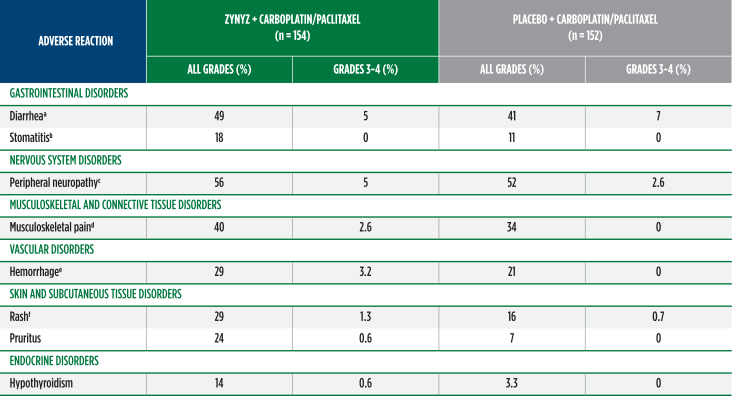
ADVERSE REACTIONS (≥10%) WITH A BETWEEN-ARM DIFFERENCE OF ≥5% FOR ALL GRADES OR ≥2% FOR GRADES 3 OR 4 IN PATIENTS RECEIVING ZYNYZ + CARBOPLATIN/PACLITAXEL
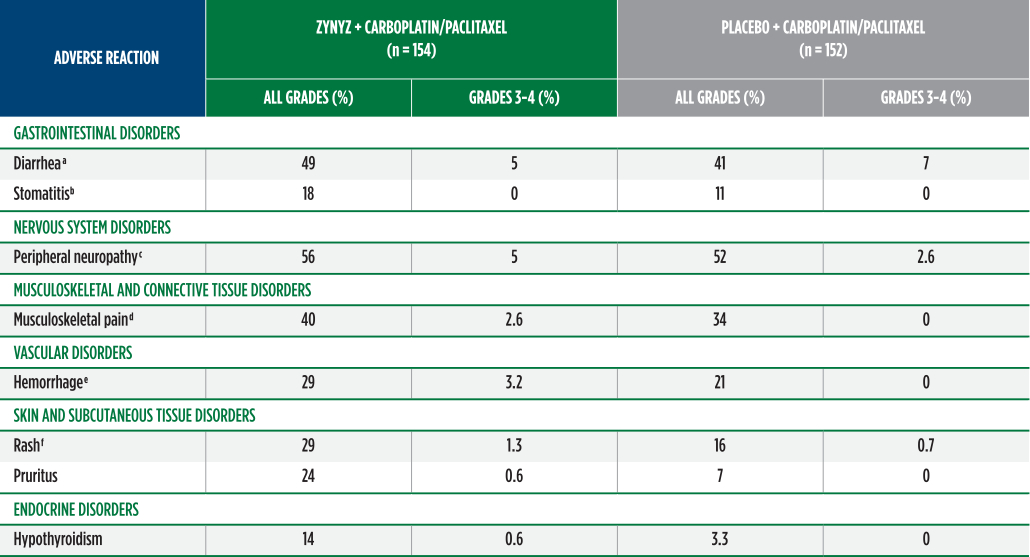
Graded according to National Cancer Institute (NCI) Common Terminology Criteria for Adverse Events (CTCAE) v5.0.
a Includes diarrhea, colitis, and frequent bowel movements.
b Includes stomatitis, aphthous ulcer, cheilitis, mouth ulceration, and mucosal inflammation.
c Includes peripheral neuropathy, paresthesia, peripheral sensory neuropathy, neuralgia, hypoesthesia, peripheral sensorimotor neuropathy, dysesthesia, peripheral motor neuropathy, and hyperesthesia.
d Includes arthralgia, arthritis, back pain, bone pain, musculoskeletal chest pain, musculoskeletal discomfort, musculoskeletal stiffness, myalgia, neck pain, non-cardiac chest pain, pain in extremity, and spinal pain.
e Includes hemorrhage, anal hemorrhage, anal ulcer hemorrhage, conjunctival hemorrhage, epistaxis, gastrointestinal hemorrhage, genital hemorrhage, hematuria, hemoptysis, hemorrhoidal hemorrhage, lower gastrointestinal hemorrhage, lymph node hemorrhage, rectal hemorrhage, stoma site hemorrhage, tumor hemorrhage, urinary bladder hemorrhage, uterine hemorrhage, vaginal hemorrhage, and wound hemorrhage.
f Includes rash, eczema, dermatitis acneiform, dermatitis, rash erythematous, rash maculo-papular, rash papular, rash pustular, and rash pruritic.
- Serious adverse reactions occurred in 47% of patients receiving ZYNYZ in combination with carboplatin and paclitaxel (vs 39% of patients on placebo2). The most frequent serious adverse reactions (≥2% of patients) were sepsis (3.2%), pulmonary embolism (3.2%), diarrhea (2.6%), and vomiting (2.6%)
- Treatment with ZYNYZ in combination with carboplatin and paclitaxel led to permanent discontinuation due to adverse reactions in 11% of patients (vs 3% of patients on placebo2). Adverse reactions resulting in permanent discontinuation of ZYNYZ included immune-mediated enterocolitis (2 patients), warm autoimmune hemolytic anemia, hepatitis, adrenal insufficiency, blood bilirubin increased, AST increased, blood alkaline phosphatase increased, arthritis, encephalopathy, peripheral sensorimotor neuropathy, hypothyroidism, immune-mediated cholangitis, pruritus, malaise, and rash (1 patient each)
- Dosage interruptions due to an adverse reaction, excluding temporary interruptions due to infusion-related reactions, occurred in 55% of patients who received ZYNYZ plus carboplatin and paclitaxel. Adverse reactions leading to interruptions in ≥2% of patients were neutropenia, anemia, thrombocytopenia, leukopenia, fatigue, COVID-19, and urinary tract infection
- The most common (≥20%) adverse reactions were fatigue, peripheral neuropathy, nausea, alopecia, diarrhea, musculoskeletal pain, constipation, hemorrhage, rash, vomiting, decreased appetite, pruritus, and abdominal pain
LABORATORY ABNORMALITIES THAT WORSENED FROM BASELINE TO GRADE 3 OR 4 OCCURRING IN ≥1% OF PATIENTS RECEIVING ZYNYZ + CARBOPLATIN/PACLITAXEL
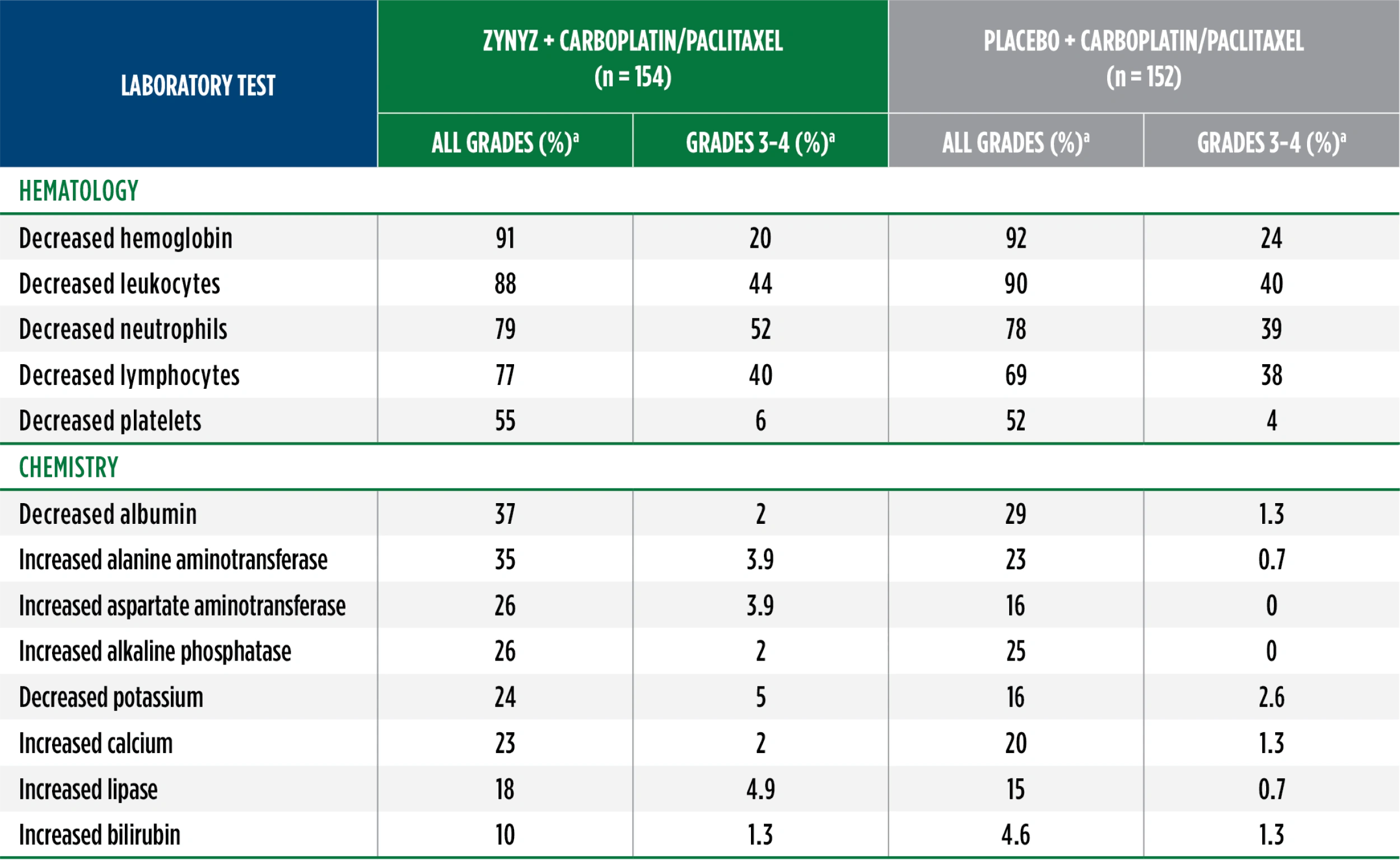
Graded according to NCI CTCAE v5.0.
aThe denominator used to calculate the rate varied from 142 to 153 based on the number of patients with a baseline value and at least one post-treatment value.
Monotherapy safety profile (POD1UM-202)1
POD1UM-202 evaluated the safety of ZYNYZ in 94 patients with platinum-refractory or intolerant locally recurrent or metastatic SCAC.
ADVERSE REACTIONS IN ≥10% OF PATIENTS
RECEIVING ZYNYZ1
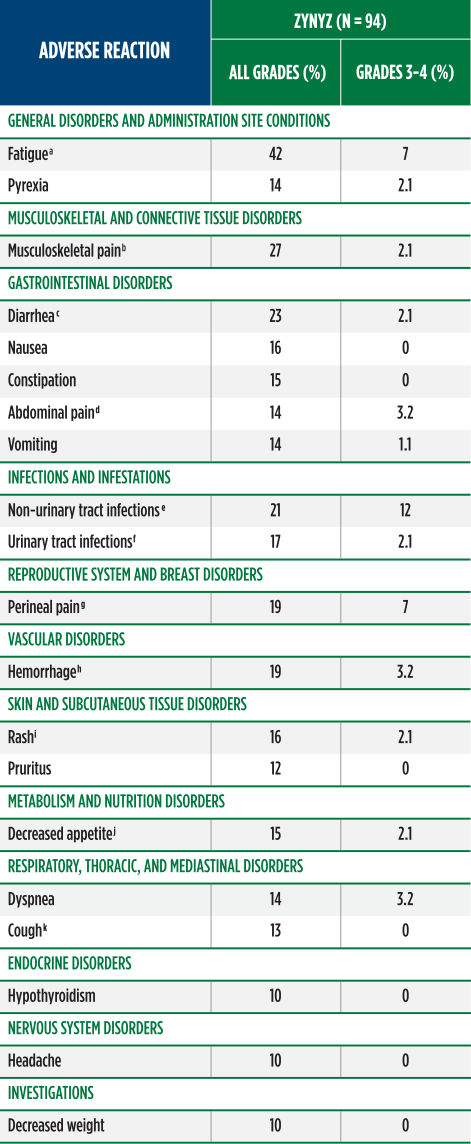
Graded according to NCI CTCAE v5.0.
aIncludes fatigue and asthenia.
bIncludes arthralgia, back pain, bone pain, musculoskeletal chest pain, myalgia, non-cardiac chest pain, osteoarthritis, pain in extremity, and spinal pain.
cIncludes diarrhea, gastroenteritis, and immune-mediated enterocolitis.
dIncludes abdominal pain, abdominal discomfort, and abdominal pain upper.
eIncludes anal abscess, cellulitis, cholangitis, cholecystitis, cholecystitis acute, device related infection, herpes zoster, Lyme disease, pelvic infection, peritonitis, Pneumocystis jirovecii pneumonia, pneumonia, postoperative wound infection, pseudomonas infection, sepsis, skin infection, stoma site infection, and wound infection bacterial.
fIncludes urinary tract infection, cystitis, escherichia urinar tract infection, and pyelonephritis.
gIncludes anorectal discomfort, pelvic pain, proctalgia, and vulvovaginal discomfort.
hIncludes epistaxis, hematochezia, hematuria, proctitis hemorrhagic, rectal hemorrhage, stoma site hemorrhage, and vaginal hemorrhage.
iIncludes rash, dermatitis, dermatitis acneiform, eczema, erythema, palmar-plantar erythrodysesthesia syndrome, rash erythematous, and rash maculo-papular.
jIncludes decreased appetite and hypophagia.
kIncludes cough and productive cough.
SAFETY RESULTS FROM THE POD1UM-202 STUDY
- Serious adverse reactions occurred in 40% of patients receiving ZYNYZ. The most frequent serious adverse reactions (≥2%) were non-urinary tract infection, perineal pain, abdominal pain, anemia, hemorrhage, diarrhea, pyrexia, urinary tract infection, musculoskeletal pain, and dyspnea
- Permanent discontinuation due to adverse reactions occurred in 4.3% of patients, including diarrhea, non-urinary tract infection, perineal pain, and rash
- Dosage interruptions due to adverse reactions occurred in 21% of patients. Adverse reactions leading to dose delays in ≥2% of patients were non-urinary tract infection, rash, diarrhea, abdominal pain, hemorrhage, musculoskeletal pain, pyrexia, and urinary tract infection
- The most common (≥10%) adverse reactions were fatigue, musculoskeletal pain, diarrhea, non-urinary tract infections, perineal pain, hemorrhage, urinary tract infection, rash, nausea, decreased appetite, constipation, abdominal pain, dyspnea, pyrexia, vomiting, cough, pruritus, hypothyroidism, headache, and decreased weight
Graded according to NCI CTCAE v5.0.
a Includes fatigue and asthenia.
b Includes arthralgia, back pain, bone pain, musculoskeletal chest pain, myalgia, non-cardiac chest pain, osteoarthritis, pain in extremity, and spinal pain.
c Includes diarrhea, gastroenteritis, and immune-mediated enterocolitis.
d Includes abdominal pain, abdominal discomfort, and abdominal pain upper.
e Includes anal abscess, cellulitis, cholangitis, cholecystitis, cholecystitis acute, device related infection, herpes zoster, Lyme disease, pelvic infection, peritonitis, Pneumocystis jirovecii pneumonia, pneumonia, postoperative wound infection, pseudomonas infection, sepsis, skin infection, stoma site infection, and wound infection bacterial.
f Includes urinary tract infection, cystitis, escherichia urinary tract infection, and pyelonephritis.
g Includes anorectal discomfort, pelvic pain, proctalgia, and vulvovaginal discomfort.
h Includes epistaxis, hematochezia, hematuria, proctitis hemorrhagic, rectal hemorrhage, stoma site hemorrhage, and vaginal hemorrhage.
i Includes rash, dermatitis, dermatitis acneiform, eczema, erythema, palmar-plantar erythrodysesthesia syndrome, rash erythematous, and rash maculo-papular.
j Includes decreased appetite and hypophagia.
k Includes cough and productive cough.
ADVERSE REACTIONS IN ≥10% OF PATIENTS RECEIVING ZYNYZ1
LABORATORY ABNORMALITIES THAT WORSENED FROM BASELINE TO GRADE 3 OR 4 IN ≥1% OF PATIENTS RECEIVING ZYNYZ
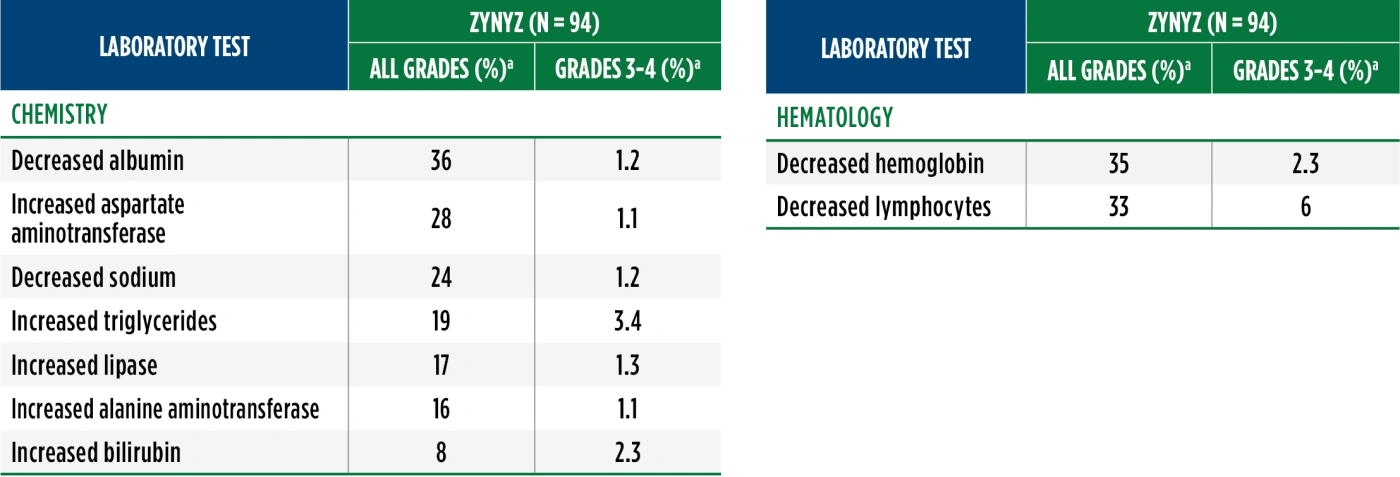
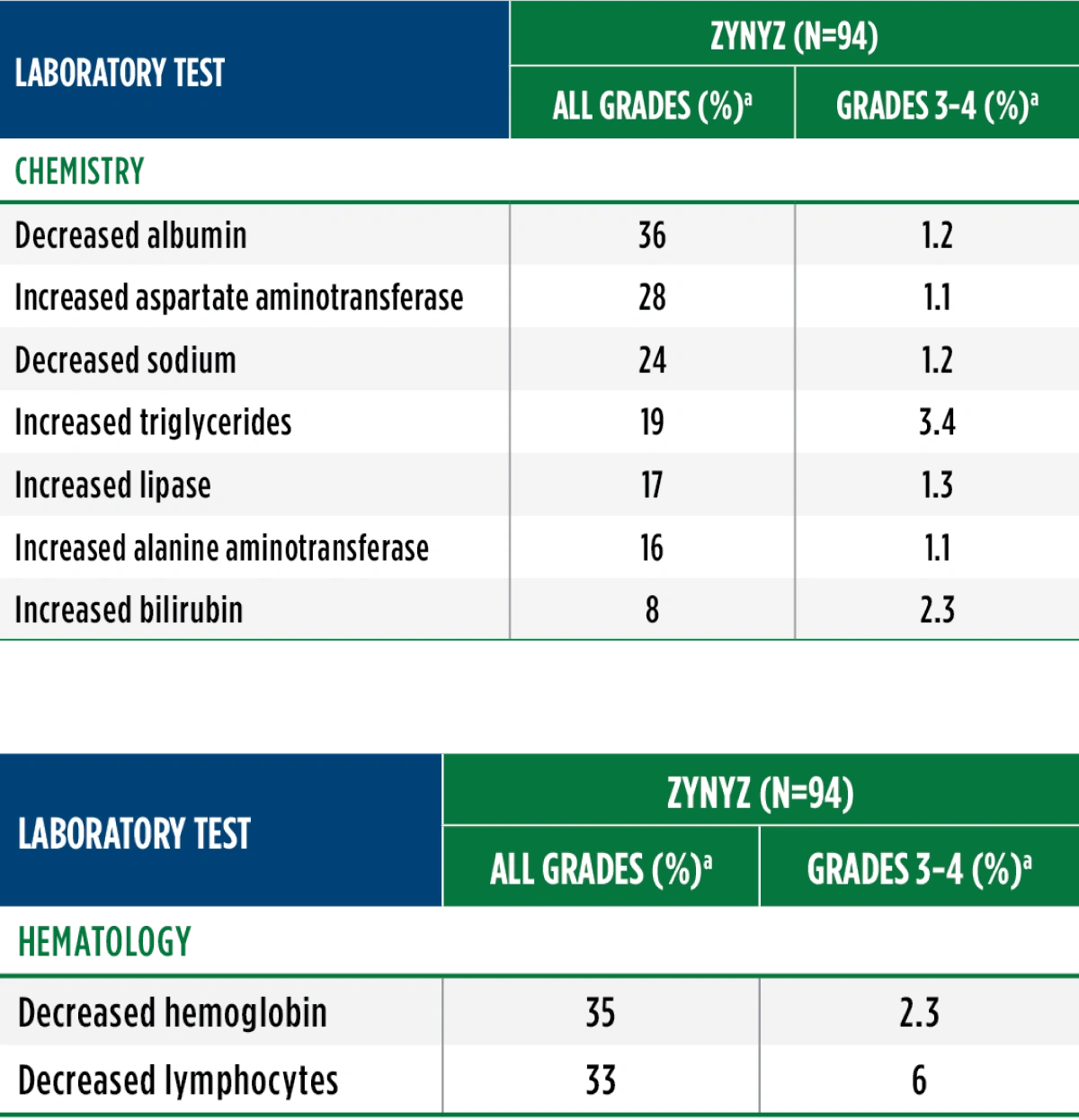
Graded according to NCI CTCAE v5.0.
aThe denominator used to calculate the rate varied from 59 to 87 based on the number of patients with a baseline value and at least one post-treatment value.
References: 1. ZYNYZ Prescribing Information. Wilmington, DE: Incyte Corporation. 2. Rao S, Samalin-Scalzi E, Evesque L, et al. Retifanlimab with carboplatin and paclitaxel for locally recurrent or metastatic squamous cell carcinoma of the anal canal (POD1UM-303/InterAACT-2): a global, phase 3 randomised controlled trial. Lancet. 2025;405(10495):2144-2152.
